- Codeinate
- Posts
- 💡 Microsoft Just Declared War on OpenAI (Inside Its Own House)
💡 Microsoft Just Declared War on OpenAI (Inside Its Own House)
PLUS: The model upgrade cycle is accelerating faster than your team can keep up.

Rachel Miller
June 04, 2026
In partnership with

☕ Morning! 💡 Your Weekly 5-Minutes of Caffeine and Tech Clarity
Quick Hits 🎯
🏗️ Microsoft is building its own AI coding model, codenamed Project Polaris, to power GitHub Copilot, and yes, it's designed to reduce dependency on OpenAI
🤖 Anthropic released Opus 4.8 just 41 days after Opus 4.7, the fastest upgrade cycle in the company's history, and it's not a coincidence
🔐 Anthropic says Mythos-level AI models (previously considered too dangerous for general release) are weeks away from going public with "stronger safety safeguards" now in place
🧩 Google's Antigravity 2.0 at I/O 2026 officially shifted the framing: you're no longer writing code, you're orchestrating agents that write it for you
🖥️ Microsoft is consolidating Copilot Chat, GitHub Copilot, Cowork, and an agentic tool called Autopilot into a single super app, targeting end of summer 2026
📱 Windows local AI is a confirmed track at Build 2026. Meaning that an on-device inference is no longer a hobbyist experiment, it's a platform bet by the world's largest software company
🦀 Gartner predicts 75% of developers will spend more time orchestrating and architecting than writing code directly by year end. The role is shifting in real time
🎁 + 4 other stories you might find useful
Our Partner 🎉
Attio is the AI CRM for high-growth teams.
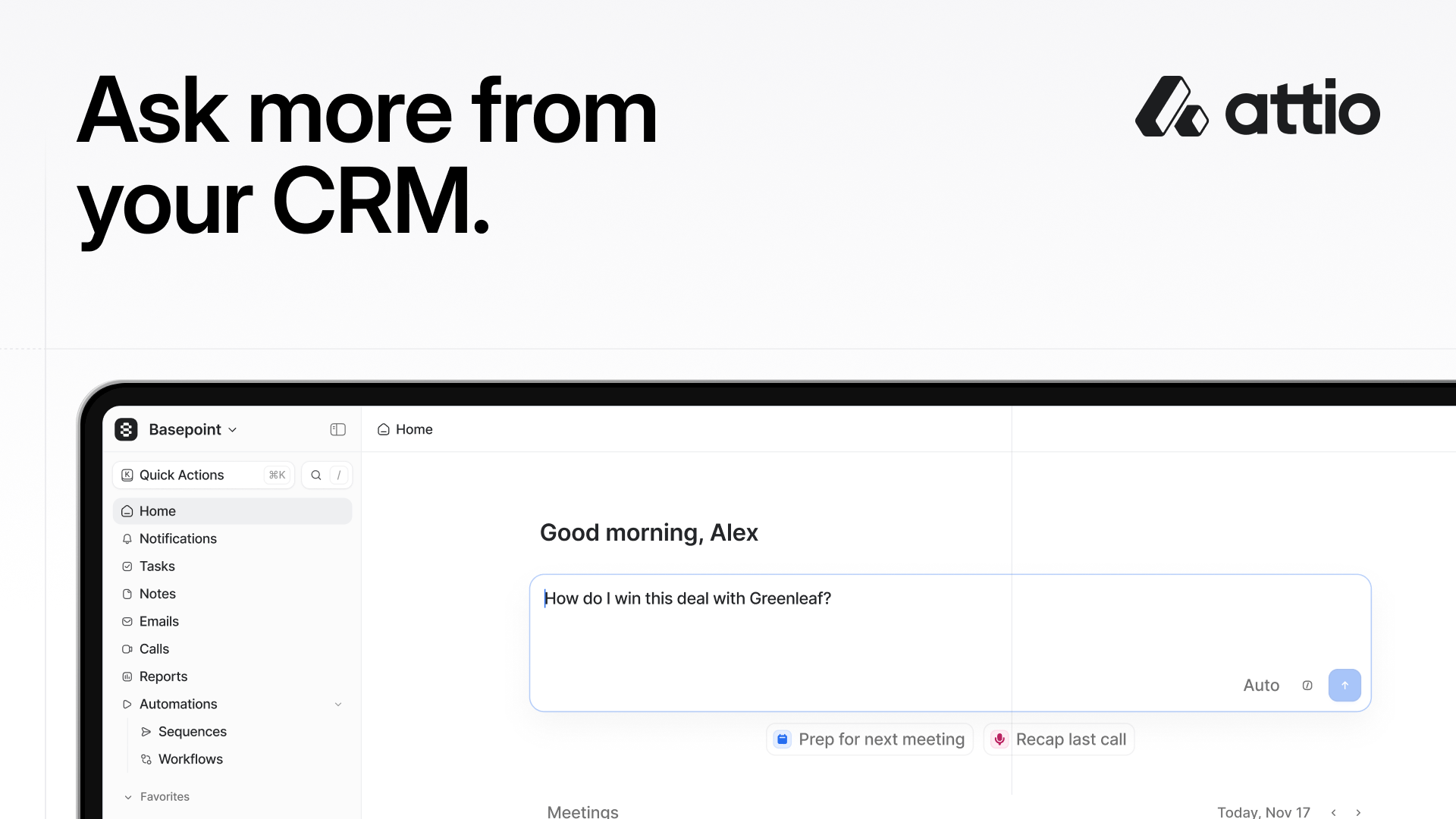
Connect your email, calls, product data and more, and Attio instantly builds your CRM with enriched data and complete context. Whether you’re running product-led growth or enterprise sales, Attio adapts to your unique GTM motion.
Then Ask Attio to plan your next move.
Run deep web research on prospects. Update your pipeline as you work. Find customers and draft outreach emails. Powered by Universal Context, Attio's intelligence layer, Attio searches, updates, and creates across your data to accelerate your workflow.
Ask more from your CRM.
The Big Picture 🖼️
💡 Microsoft Just Split With OpenAI. Strategically, Not Officially.
For three years, Microsoft had the best deal in tech: resell the world's most capable AI without building it yourself. That's over.
At Build 2026, Microsoft is expected to formally announce Project Polaris, a homegrown coding model designed to power GitHub Copilot, reduce margin bleed to OpenAI, and give Microsoft control over the full developer stack.
The move also includes transcription, reasoning, speech, and image models, all built in-house.
This isn't a breakup. It's a renegotiation of power. The dynamics reshaping the Microsoft-OpenAI relationship explain why every enterprise that bet big on Copilot should be watching this one carefully.
The takeaway: when a platform player starts owning its own model layer, the pricing, roadmap, and reliability calculus changes for everyone downstream.
💡 The Copilot Super App Gamble Is Bigger Than It Looks.
Microsoft isn't just merging interfaces. It's betting that developers, PMs, and knowledge workers will accept a single AI-first entry point for every task. Coding, communication, file management, and agentic automation.
GitHub Copilot already generates roughly 46% of all code on the platform, per Microsoft's own telemetry. Now Microsoft wants to wrap that capability inside a unified experience that covers your whole day, not just your IDE.
The leaked screens and the Autopilot agent framing suggest Microsoft is making a direct play for the attention layer, not just the productivity layer. That's a very different ambition.
The takeaway: whoever controls the interface where work actually happens controls adoption. This is Microsoft trying to win that before Google or OpenAI can.
💡 Anthropic Is Cycling Models Faster Than Teams Can Update Prompts.
Opus 4.7 in April. Opus 4.8 in May. And now Mythos-level capability potentially shipping to the public within weeks. That's three meaningful capability shifts inside 60 days.
The engineering implication most people are sleeping on: prompt behavior, output reliability, and benchmark performance can change significantly between model versions. Teams relying on hardcoded model strings in production are about to feel it.
The Dynamic Workflows tool shipping with Opus 4.8, designed to coordinate swarms of subagents, is the real story. It's a direct signal that Anthropic is optimizing for orchestration workloads, not just single-turn quality.
The takeaway: your model evaluation cadence needs to match the release cadence. Right now, most teams are running a 6-month cycle in a 6-week world.
💡 The AI Coding Market Just Hit $12.8B. And the Lead Is Already Contested.
GitHub Copilot holds roughly 37% market share. Cursor 3 shipped in April with background agents that open pull requests while your laptop is closed. Windsurf (formerly Codeium) is still gaining ground.
But the number that matters isn't market share. It's adoption trajectory. 51% of all code committed to GitHub in early 2026 was generated or substantially assisted by AI. That's not a niche productivity tool anymore. That's the default mode of software creation.
The question for engineering leaders isn't "should we adopt AI coding tools?" It's "which tool becomes the standard, and does that decision lock us into a vendor's model roadmap?"
The takeaway: the editor wars of 2024 are now the model wars of 2026. Choose based on agent capability and model flexibility, not just code completion quality.
💡 On-Device AI Just Got a Credibility Upgrade It Couldn't Buy.
Microsoft dedicating an entire Build 2026 track to Windows-native AI inference is the moment local AI stops being a hobbyist conversation and becomes a platform conversation.
The underlying shift: small language models running on-device can now outperform cloud models on specific tasks when combined with intelligent test-time compute allocation. The privacy, latency, and cost advantages compound quickly at scale.
Google's LiteRT production release, 1.4x faster GPU performance than TFLite, dropped quietly in January and barely made the news.
It should have.
It's the foundation layer for the next billion on-device AI experiences.
The takeaway: any product team still assuming "AI = cloud API call" is building on a constraint that's disappearing. The toolchain for local inference is now production-ready.
💡 Google's Antigravity Play Is a Bet That "Builder" Is Now a Universal Role.
"Thanks to these agents, now anyone can be a builder." That's a direct quote from Google's I/O keynote framing. It's also a direct shot at the assumption that software development requires software developers.
Antigravity 2.0, WebMCP (a proposed open web standard for browser-based AI agents), and Gemini 3.5 Flash as an "action model" are all pointing at the same thesis: the agent-first development platform is Google's answer to Microsoft's Copilot dominance among developers.
Whether that lands depends on distribution. Google has Android, Chrome, and Workspace. That's a lot of surfaces for agentic AI to run on.
The takeaway: the platform that controls where agents execute will collect the most valuable behavioral data. Google is making a serious play for that position.
💡 The Model Accuracy Race Has a New Buyer: Regulated Industries.
GPT-5.5 vs. Opus 4.7 vs. Opus 4.8, the Bank of New York tested them all and their CIO cited one deciding factor above benchmarks: hallucination resistance.
Finance, healthcare, and legal sectors represent enormous AI spend. And they're not buying on capability, they're buying on auditability and accuracy under edge conditions. The regulated buyer is the most conservative and the most valuable.
Anthropic's explicit focus on "safer, more literal outputs" in the Opus 4.7/4.8 family looks less like positioning and more like product-market fit discovery.
The takeaway: the frontier model race isn't won on a single benchmark. It's won in the procurement meeting where the CIO explains the decision to their board.
Trending Tools 📈
Lum1104/Understand-Anything Link
Turns any code, knowledge base, or document into an interactive knowledge graph you can explore, search, and ask questions about
Why it's trending: +1,600 ⭐ this week. Works with Claude Code, Cursor, Codex, and Copilot. Teams using it to onboard into unfamiliar codebases in hours, not weeks
farion1231/cc-switch Link
Cross-platform desktop all-in-one assistant for Claude Code, Codex, OpenCode, Gemini CLI, and Hermes Agent in a single interface
Why it's trending: +430 ⭐ this week. Solves the "which AI CLI is open on which terminal" chaos that multi-agent workflows create
hardikpandya/stop-slop Link
A skill file for removing AI tells from prose. Eliminates the patterns that make AI-generated writing obvious
Why it's trending: +183 ⭐ this week. Content teams and devs writing documentation are using it to make AI drafts sound like humans wrote them
codecrafters-io/build-your-own-x (+509 ⭐ this week, 🗒️ Markdown) Link
Hands-on guides for building core technologies from scratch. Databases, compilers, interpreters, shells
Helps teams: In an era where AI writes the code, understanding what the code actually does is becoming the real differentiator. This repo is back on trend for a reason.
OpenBMB/VoxCPM (+354 ⭐ this week) Link
Tokenizer-free TTS for multilingual speech generation, creative voice design, and realistic voice cloning
Why it's trending: On-device voice AI is getting a serious look from teams building apps that can't afford cloud latency or cloud cost
Tech Trend of The Week 📊
🔍 "Microsoft Build 2026" spiked 890% in search volume this week (US, Tech category)
The week before a major developer conference always creates a search surge, but this one is notably different from recent years. The queries aren't "what is Build" — they're "Microsoft AI homegrown models," "Project Polaris," and "Copilot vs OpenAI."
Developers aren't looking for the keynote highlights. They're trying to understand whether their platform dependency just changed.
The signal: enterprise developer trust in AI platforms is in active evaluation mode. Teams are asking whether to build deeper into a vendor stack or stay portable. That question used to get asked once a year. Now it's getting asked every quarter.

Our Partner 🎉
10x the context. Half the time.

Speak your prompts into ChatGPT or Claude and get detailed, paste-ready input that actually gives you useful output. Wispr Flow captures what you'd cut when typing. Free on Mac, Windows, and iPhone.
Hit Reply And Tell Me 💬
What's the most impressive tech you've seen recently that actually works?
I read every single reply
Go where your customers actually are 📍
Most of the internet copies Reddit.
Blogs, SEO pages, AI models, product reviews. They all pull from the same well.
Reddit is the 3rd biggest site on earth. And it trains the bots your users ask for help.
Odd Angles Media runs Reddit campaigns for over 45 brands each month.
Luckily, we’ve convinced them to give away all of their strategies in a (free) ebook ⬇️⬇️
Reach the People Who Sign the Checks 💰️
40,000+ CTOs and engineering leaders. 96% US-based. 80%+ corporate emails.
They evaluate vendors. They shortlist solutions. They buy.
Advertise with us on Paved → (discount applied)